




NEPA – Neuroscience of Performative Arts International Seminar
15-17 December 2026 | UNATC CINETic (#3-b Tudor Arghezi Street)
The LDCAPEI Lab at UNATC CINETic is organizing the second NEPA – Neuroscience of Performative Arts International Seminar on 15-17 December 2026.
The seminar aims to foster collaboration and the exchange of knowledge and best practices among performing arts practitioners, neuroscience researchers, psychologists, and art therapists working in the fields of performing arts and film therapy. It seeks to promote interdisciplinary research that advances understanding of the processes underlying performative representations and the mechanisms through which the performing arts contribute to health, well-being, and social development.
Over the past decades, there has been growing interest in applying neuroscience and biopsychological methods to deepen our understanding of artistic creation, practice, and participation. Researchers have increasingly sought to uncover the biological substrate underlying complex artistic processes. In response to this development, NEPA aims to facilitate the exchange of practices and promote the formation and expansion of interdisciplinary collaborative research teams, fostering innovative research at the intersection of the arts, neuroscience, and psychology.
Understanding core processes at the basis of performative representation at biophysiological levels will increase the contribution of performative practices and the efficacity of current approaches of theatre, dance and music to health and therapy, more efficient teaching practices and artistic practices and to the understanding of their contribution to the development of the human society.
Understanding the core processes underlying performative representation at the biophysiological level will strengthen the contribution of the performing arts to health, well-being, and therapeutic interventions. It will also support the development of more effective approaches to theatre, dance, and music education and artistic practice, while enhancing our understanding of the role that the performing arts play in the development of society as a whole.
We welcome contributions presenting original research related to the conference themes, particularly studies employing neuroscience, psychology, biopsychology, or other interdisciplinary approaches. The primary presentation format consists of a 10-minute oral presentation followed by a Q&A session. Contributions are to be presented on site.
THEMES
- Biological and neural substrates of role-play and participation in fictional worlds
- Art as social cognition
- Art practices from phylogenetic perspectives
- Synchrony
- Enactive participation and embodiment
- Mechanisms of art practice contributing to health
- Art contribution to quality of life
- Art at molecular level
- Methods: how to quantify the unquantifiable, how to adapt lab methods for performance, rehearsal and other spaces of art practice
CALENDAR
- Open call launched: 6 July 2026
- Deadline for submitting proposals: 15 November 2026
- Seminar dates: 15-17 December 2026
BACKGROUND
Starting with the project MET Developing a Methodology of Therapy Through Theatre with an Effect at the Neurochemical and Neurocognitive Levels UNATC has focused an important part of its research on some of the key aspects at the basis of theatre practice such as imitation, synchrony, autobiographical memory and role-play and, more recently, presence. Using the perspective of social neuroscience towards art practice brought fascinating data and results for theatre practice and its use in applied settings.
SPEAKERS
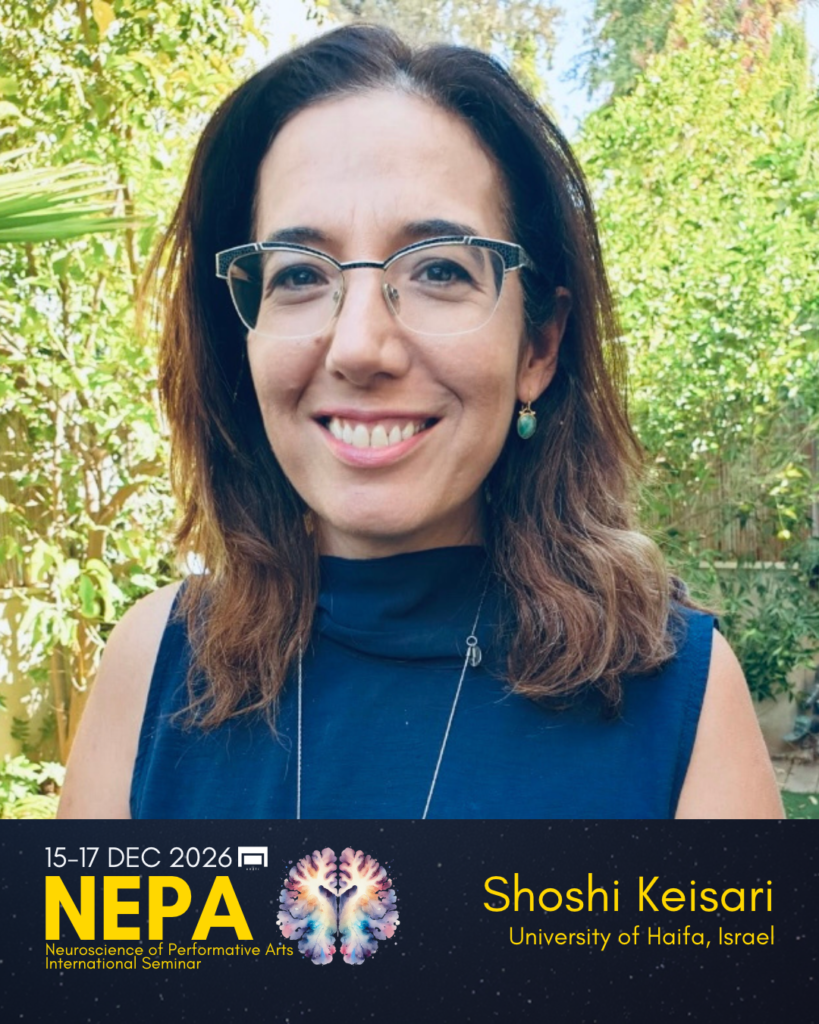
Shoshi Keisari
PhD, Associate Professor at the School of Creative Arts Therapies, University of Haifa (IS)
Shoshi Keisari, Ph.D Associate Professor at the University of Haifa, directs the Drama Therapy and Psychodrama Graduate Program. She is also a researcher with the Center for Research and Study of Aging, the Emili Sagol Creative Arts Therapies Research Center, and the Drama and Health Science Lab at the University of Haifa. Her research investigates playfulness and its neural mechanisms, drama therapy across the lifespan, playback theatre, and arts-based approaches for aging. She is the co-author of the book An Introduction to Psychotherapeutic Playback Theater: Hall of Mirrors on Stage, published by Routledge. She has presented her work at international conferences and published in international refereed journals. Her studies are supported by the Israel Science Foundation and the National Science Foundation NSF–BSF.
KEYNOTE
Playful brains: Exploring the cognitive and neurophysiological processes of improvisation in aging
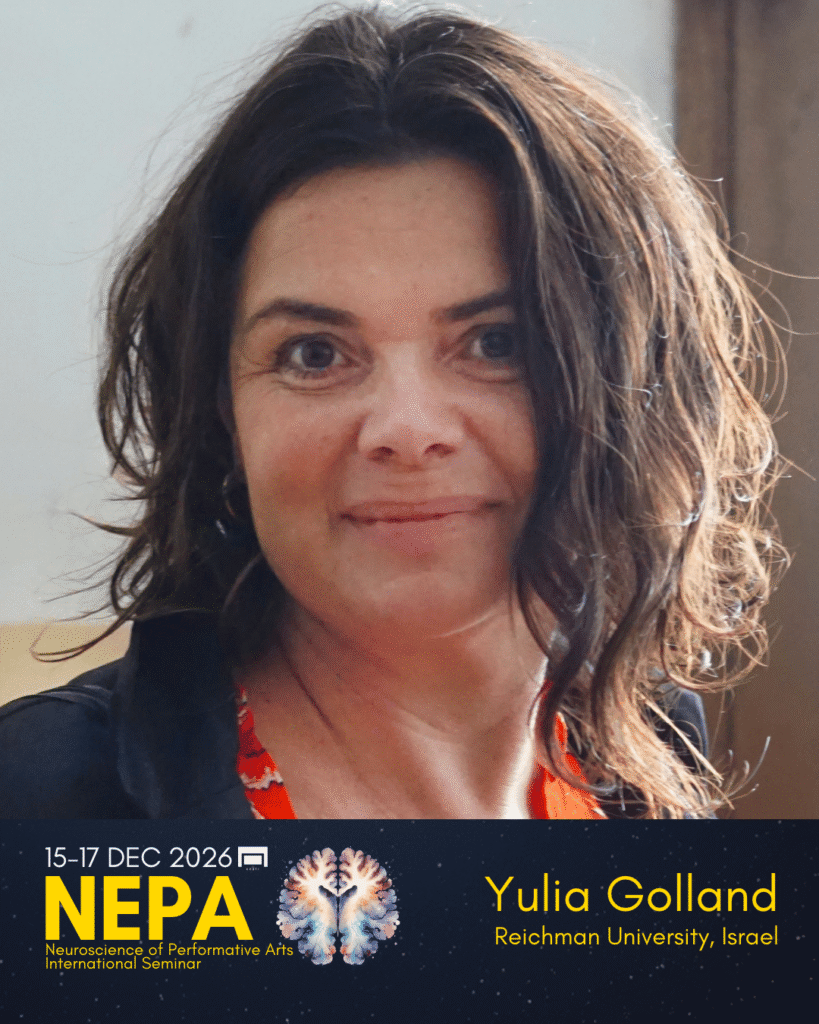
Yulia Golland
PhD, Principal Investigator of the Social Physiology Lab at Reichman University (IS)
Yulia Golland is the Principal Investigator of the Social Physiology Lab at Reichman University, jointly based at the Dina Recanati School of Medicine and the Baruch Ivcher School of Psychology. Broadly, her research examines how physiological systems of arousal and regulation operate in real-life social contexts, with the long-term goal of identifying mechanisms that enable people to adapt and thrive under challenge and uncertainty.
Her work combines multimodal physiological and behavioral measures with ecologically grounded paradigms, field experiments, and rigorous quantitative approaches. Her research has made substantial contributions to the study of interpersonal synchrony and compassion, and more recently to the mechanisms and effects of playful interactions across the lifespan. While rooted in basic social neuroscience, her research is increasingly extending into clinical domains, such as psychedelic-assisted psychotherapy, with the aim of translating mechanistic insights into meaningful outcomes for health and well-being.
KEYNOTE
Playful and Alert: The Role of Optimal Positive Arousal in Playful Interactions
Social playfulness is a unique form of social interaction where individuals step outside routine roles and predictable patterns to engage in novel and often surprising exchanges. Evolutionarily grounded and intrinsically rewarding, it has been linked to substantial benefits for mental, cognitive, and physical health, as evidenced in both the performing arts and therapeutic contexts. Yet the mechanisms underlying these benefits remain poorly understood.
In a series of studies involving more than 200 younger and older adults, my lab examined physiological, facial, and affective processes during playful improvisational interactions. Even brief playful episodes elicited a distinctive profile of optimal arousal, marked by surges in autonomic activation, substantial increases in positive affect, and an enhanced sense of social connection. I will propose that social playfulness transforms uncertainty-driven arousal into positive, energizing affect. This positions it as a key mechanism through which arts-based interventions foster curiosity, exploration, engagement with novelty, and social connection.
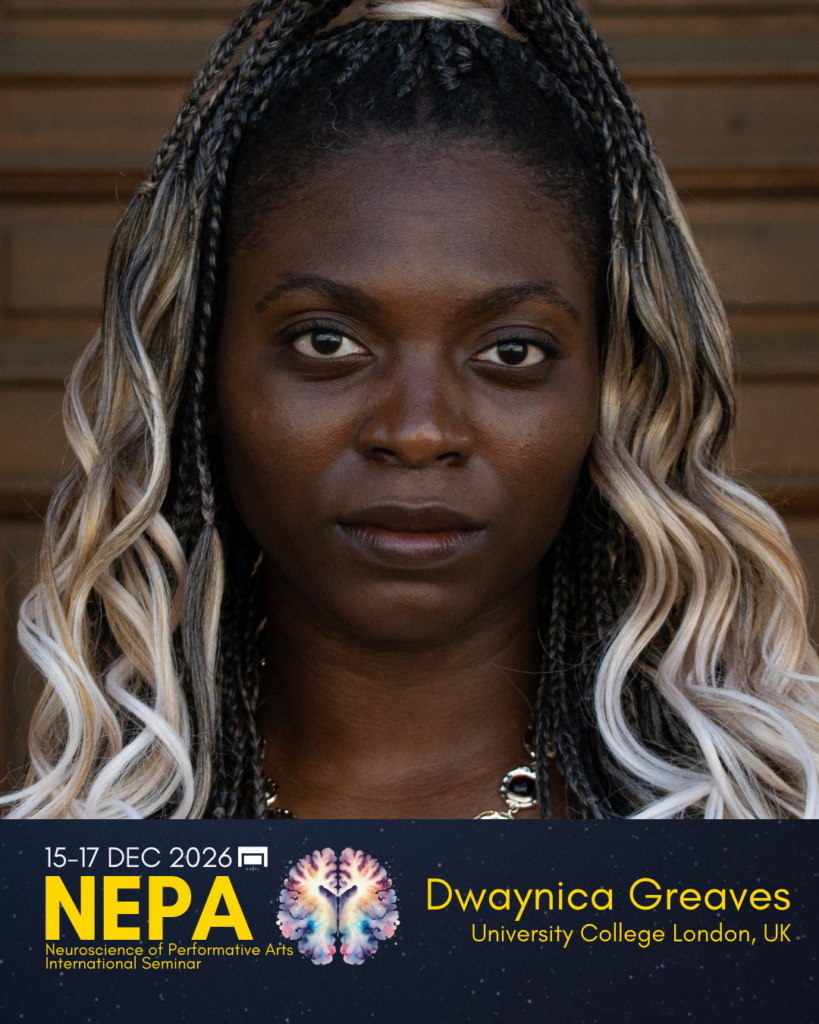
Dwaynica Greaves
PhD, Neuroscientist, Institute of Cognitive Neuroscience, University College London (UK)
Dwaynica Greaves is a Neuroscientist, Neuroaesthetician and Creative from the Institute of Cognitive Neuroscience, University College London. She has spent the last six years researching at the intersection of Theatre and Social-Cognitive Neuroscience, to investigate the effects of building and performing a character on an actor’s sense of self.
KEYNOTE
Capturing the Actor-character distance: a qualitative investigation
In this talk, I will discuss the qualitative component of a mixed-methods questionnaire, The Bloomsbury Actor’s Questionnaire (BAQ; Greaves et al., under review) currently in development for Theatre-Neuroscience research. One of the aims of the BAQ was to capture and measure the factors that contribute to the perceived distance an actor experiences between themselves and their character across embodied dimensions. These qualitative insights offered a lens for exploring actors’ experiences of becoming, doubleness, and distance in relation to their characters. Actors’ responses continue to deepen our understanding of what it means to embody a character, drawing on the expertise and lived experiences of the actors themselves.
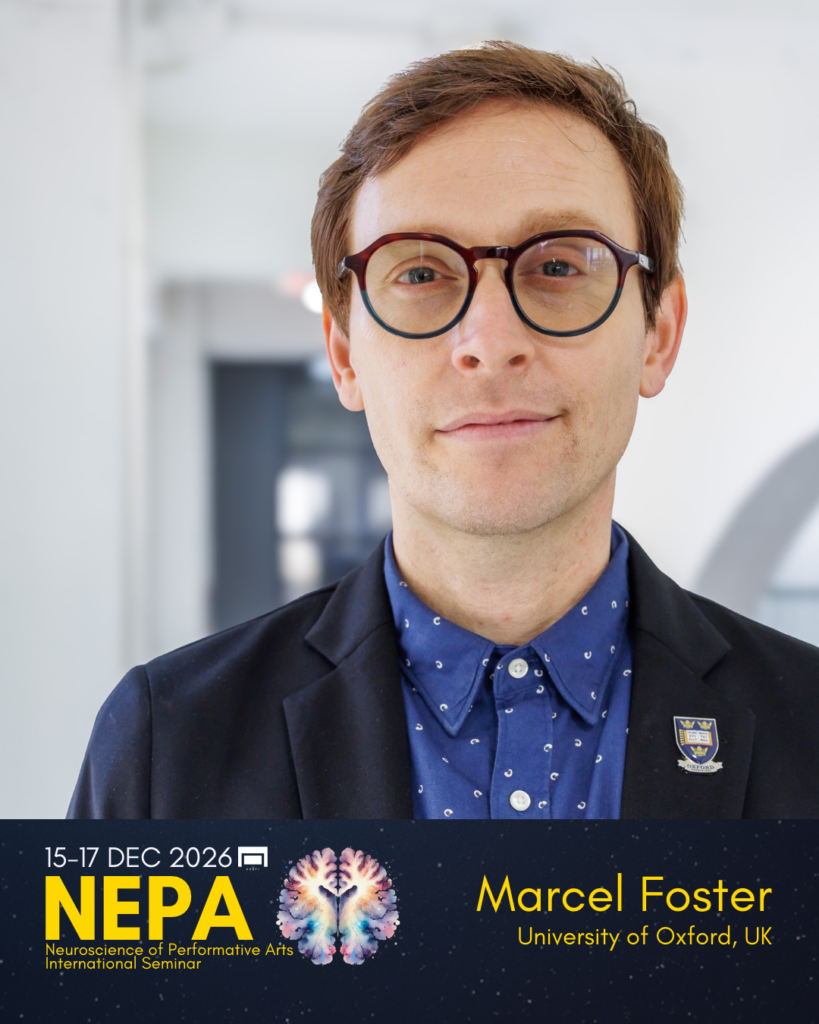
Marcel Foster
MPH, CEO and Co-Founder of Performance Hypothesis and a Doctoral Researcher (DPhil, PRS) in Translational Health Sciences at the University of Oxford’s Nuffield Department of Primary Care Health Sciences
Marcel W. Foster, MPH (they/them) is the CEO and Co-Founder of Performance Hypothesis and a Doctoral Researcher (DPhil, PRS) in Translational Health Sciences at the University of Oxford’s Nuffield Department of Primary Care Health Sciences.
Beginning their career in behavioral observation at the Jane Goodall Institute—where they co-authored early research in the American Journal of Primatology (2008), Foster has dedicated nearly two decades to understanding human interaction, group cohesion, and the systemic evaluation of complex health interventions. They hold a Master of Public Health from Emory University and serve as affiliate faculty at the University of Florida Center for Arts in Medicine.
At Performance Hypothesis, Foster directs strategy and policy evaluation for major healthcare systems,cultural institutions, and global health partners—including NYC Health + Hospitals, the Centers for Disease Control and Prevention (CDC), the World Health Organization (WHO), and the Jimmy Carter Presidential Center. Under their executive leadership, Performance Hypothesis spearheaded the research and advocacy initiatives that resulted in the passage of Georgia’s historic House Resolution 1007, the first dedicated arts and mental health legislative resolution in the United States.
Their doctoral research at Oxford builds directly on these achievements, examining how state bureaucracies,health systems, and policy architects operationalize, finance, and sustain creative health infrastructure globally.
KEYNOTE
From Observation to Systemic Impact: A Personal Journey Through Human Interaction, Performative Neuroscience, and Health Policy
Long before mapping global health policies or evaluating creative health interventions, my path began with a fundamental practice: close observation. Early in my career, my work at the Jane Goodall Institute, which included co-authoring observational behavioral research in the American Journal of Primatology (Foster et al., 2008), taught me how deeply non-verbal communication, group cohesion, and social bonding are rooted in our shared nature. While that time at the Institute was about observing foundational social dynamics rather than studying arts or health, it instilled a lasting perspective on how we attune to human interaction and embodied practice.
Decades later, that same lens of careful observation informs how we evaluate creative health practice at the intersection of neuroscience and public policy. Modern social neuroscience has illuminated how role-play, embodiment, and creative performance modulate bio-behavioral responses, oxytocin levels, and affective regulation. Yet a critical translation gap remains between these micro-level neuro-performance insights and the macro-level health systems required to sustain them.
This keynote reflects on that arc, from learning to observe raw social interaction at the Jane Goodall Institute to building evaluation frameworks for complex health systems. We explore how researchers, performance practitioners, and policy architects can bridge the gap between creative spaces and clinical infrastructure, translating the nuanced human experience of performative arts into actionable, evidence-based health policy.
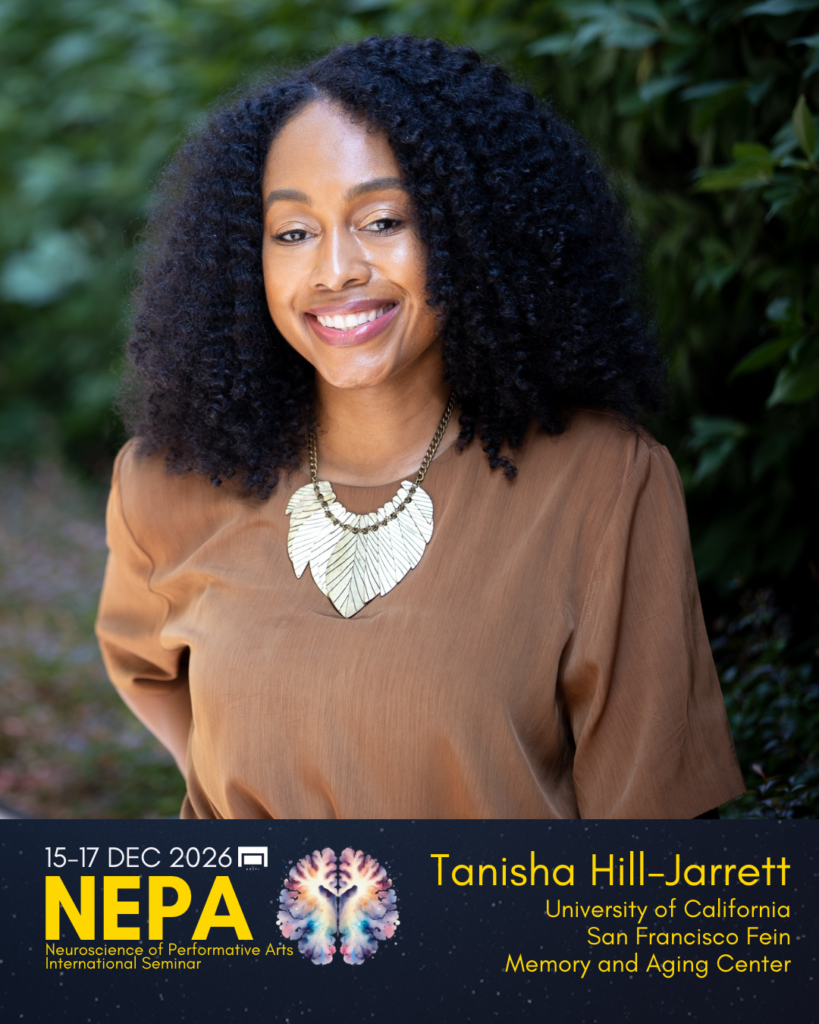
Tanisha Hill-Jarrett
Neuropsychologist and an assistant professor of neurology at the University of California
Tanisha Hill-Jarrett is a neuropsychologist and an assistant professor of neurology at the University of California San Francisco Fein Memory and Aging Center. Her research examines how cross-cutting racism and sexism shape Black women’s cognitive aging and risk for Alzheimer’s disease and related dementias. The daughter of Patricia and granddaughter of Alberta, Dr. Hill-Jarrett’s work is grounded in their teachings, Black feminist thought, and a commitment to equitable futures. Through community-based work, she uses Afrofuturism as a framework for radically imagining futures where Blackness is integral, memory is honored, and aging is shaped by care and possibility.
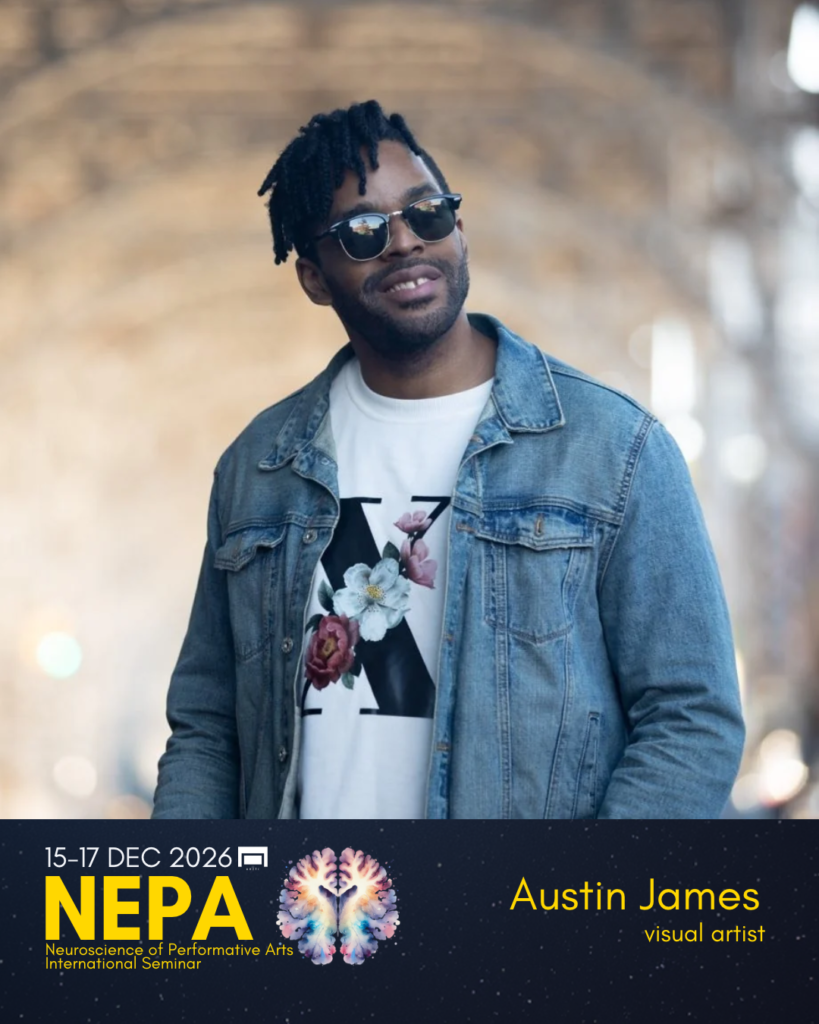
Austin James
Visual Artist
Austin James is a dynamic visual artist and Stanford University film graduate dedicated to empowering community-focused creators and celebrating Black life. Balancing roles as a video editor and freelance photographer, his post-production credits span acclaimed series and documentaries on Showtime, Hulu, and Netflix. His striking photography has been featured in online editorials, gallery exhibitions, and NFTs, earning him recognition as a 2023 Gallery 190 artist and a 2024 Hellman artist-in-residence at the UCSF Memory and Aging Center. Through both still and moving images, Austin crafts emotionally resonant narratives that inspire change and assert Black agency.
KEYNOTE
Who Gets to Imagine the Future? Afrofuturism, Creative Aging, and the Power of Art to Envision Alternative Futures
Imagination is foundational to how individuals envision and construct possibilities beyond their present circumstances, yet opportunities to imagine and shape alternative futures are not equally distributed. Social and structural systems influence whose experiences are represented, whose knowledge is valued, and whose visions of the future are recognized. Individuals experiencing intersecting forms of social marginalization are frequently excluded from conversations about collective futures.
This presentation explores the role of art and Afrofuturism in challenging dominant narratives of aging, creating opportunities for collective future-making, and shaping brain health as we age. At the center of this discussion is a creative aging program developed and implemented in the San Francisco Bay Area of California (United States). The program engaged 42 older Black women (M age = 73.6 years, SD = 6.20) over ten weeks, providing insights into the possibilities of community-engaged, arts-based programming, and the use of Afrofuturism as a culturally relevant strategy for creating a collective future rooted in equity. Through storytelling, photography, art-making, and facilitated discussions, participants explored personal and collective histories and envisioned alternative futures centered on their lived experiences and aspirations.
We will discuss Afrofuturistic artistic practices as processes of knowledge production, creative inquiry, and social transformation. We examine the connections between memory, imagination, identity, and future-oriented thinking, while raising questions about how scientists and artists can collaboratively investigate and support these processes. Lastly, we consider the implications of this work for interdisciplinary research, healthy cognitive aging, and community-based approaches to envisioning and building more inclusive futures.
WORKSHOP
Embodying Radical Imagination: A Futures Co-Creation Laboratory
Drawing on Robin D. G. Kelley’s (2002) concept of freedom dreams, Radical Imagination refers to the individual and collective capacity to envision worlds beyond existing social limitations and imagine possibilities for societal transformation. While a necessary component of designing liberatory futures, Radical Imagination can often remain abstract with limited opportunities to experience imagined alternatives or identify steps toward their realization. Embodiment is considered a critical component of moving from ideation to action. This workshop seeks to use embodied Radical Imagination to explore the ways perception, sensation, movement, and material shape how we know and imagine, and actualize our collective dreams. Artists and scientists will explore embodied radical imagination as a practice of inquiry and praxis.Guided by the Experiential Futures Ladder Framework (Candy & Dunagan, 2017), workshop participants will engage in a futures design activity where they co-create a pre-experienced future with material artifacts using audio-visual technology. These pre-experienced futures will become starting points for critical reflection: Whose futures are represented? What existing arrangements must change? What new, embodied possibilities emerge through the experience? Participants will leave with concrete next steps to explore how an imagined possibility might inform collective action.
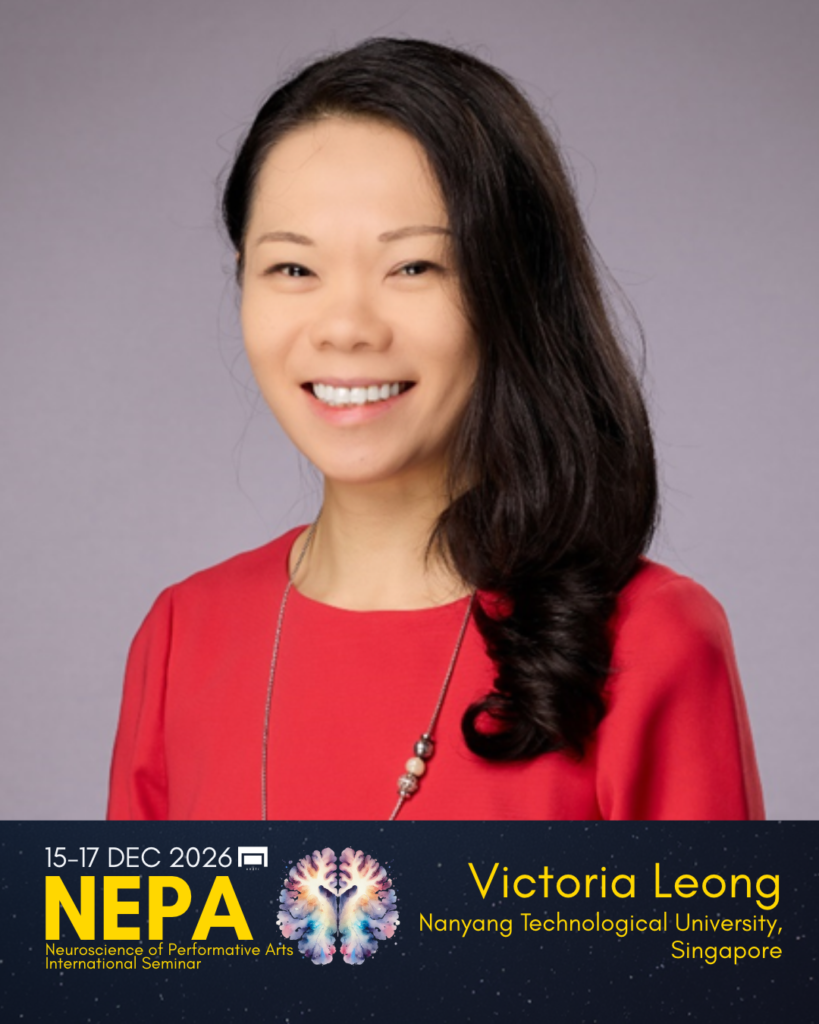
Victoria Leong
PhD, Professor, Founding Director of the Early Mental Potential and Wellbeing Research (EMPOWER) Centre; Associate Dean, Nanyang Technological University, Singapore
Victoria Leong is Full Professor of Developmental Cognitive Neuroscience, Founding Director of the Early Mental Potential and Wellbeing Research (EMPOWER) Centre, Deputy Director of the Cambridge-NTU Centre for Lifelong Learning and Individualised Cognition and Associate Dean (Outreach and Partnerships) of the Graduate College at Nanyang Technological University, Singapore. She is also Affiliated A/Professor of Pediatrics at the University of Cambridge, UK. Her research examines the neural basis of the parent-offspring “social interactome”, across human and rodent species, in both healthy and disease models. She is a pioneer in the use of dyadic-EEG and in the development of culture-fair dyadic sociometric predictive models of infant cognition and developing executive function. This research has been translated into early precision screening tools and personalised interventions (patent-pending), now being trialled in real-world contexts. Her work has received recognition through the FABBS Early Career Impact Award, Robert J. Glushko Prize and the Nanyang Research Award. She previously held the Sutasoma Junior Research Fellowship at the University of Cambridge (UK), followed by the Parke Davis Fellowship at Harvard University (US). Through her research labs based in Cambridge University and Singapore, she has mentored over 100 early career researchers and research students. Her team is culturally diverse, with researchers hailing from 16 different countries. She has built strategic partnerships across US, Europe, Asia, South America and Africa through international collaborative research programmes worth over SGD$50M (USD$35M), holding over SGD$20M (USD$15M) as Principal Investigator.
TALK: Understanding early human development through the parent-child interactome
During early sensitive periods, healthy neurodevelopment depends on warm, contingent communication and social engagement between infants and caregivers. The timing and pattern of these interactions is crucial. Optimally, caregivers provide rich multisensory experiences through responsive and predictable temporal sequences to regulate infant attention and emotion. This creates stable coupled biobehavioural states between parent and child, such as joint attention and emotional synchrony, which potentiate communication and social knowledge transmission between adult and child. This multisensory interface can be described as the parent-child interactome, which provides a systems level description of the parent and child’s joint neurophysiological and sensorimotor state space, created through interaction. In this talk, examples will be provided from both human and animal optogenetic models to illustrate the neural attractor states that arise from dynamics within the parent-offspring interactome. Moving from theory to real-world application, dyadic sociometrics is introduced as a technique for real-time multi-modality AI-based analysis of the parent-child interactome (patent pending). For infants as young as 12 months of age, the parent-child interactome predicts emerging language, socioemotional and cognitive skills with up to 96% accuracy across UK, Singapore and Brazil cohorts. This scalable technology is now being trialled by early intervention service providers in Singapore as a culture-fair deep phenotyping tool for early developmental profiling. The future potential for interactome-based techniques to advance current understanding of neurodevelopment and sensitive periods, and to be used in early risk identification and personalised therapeutics is discussed.
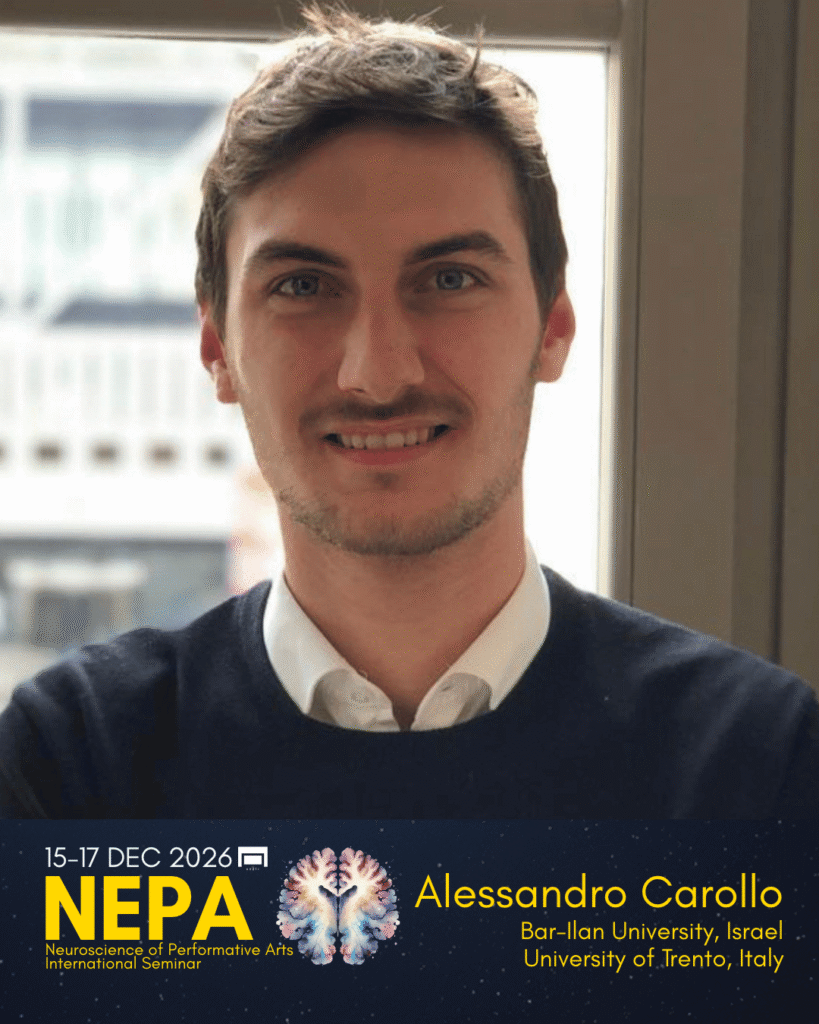
Alessandro Carollo
Ph.D., Postdoctoral Researcher, Department of Psychology, Bar-Ilan University (IS); Research Collaborator, Department of Psychology and Cognitive Science, University of Trento (IT)
Alessandro Carollo is a postdoctoral researcher at Bar-Ilan University and a research collaborator at the University of Trento. His research focuses on the neural and physiological mechanisms underlying human social interactions, combining neuroimaging, physiological recordings, and computational approaches. His work investigates interpersonal synchrony in naturalistic settings, examining how social contexts and relationships shape neural and physiological coordination. More recently, his research has expanded from dyadic interactions to larger groups, integrating conceptual and network-based approaches to investigate the organization of collective dynamics. His broader goal is to advance our understanding of how individuals coordinate and interact across different levels of social complexity.
TALK: From Duets to Ensembles: Rethinking Synchrony as a Network of Collective Coordination
Interpersonal synchrony has become a central concept in social neuroscience, yet most research has focused on dyadic interactions. Drawing on large-scale fNIRS hyperscanning research across social contexts and relationships, I will first discuss how neural synchrony is shaped by the interactional setting and the challenges of extending these findings to larger groups. Building on recent conceptual work, I will introduce relational multiplicity as a defining feature of group interactions, where individuals coordinate simultaneously and differently with multiple others. This perspective challenges the reduction of group synchrony to aggregated dyadic measures and highlights the need to consider the organization of interpersonal relationships within a group. I will then present recent empirical work investigating physiological synchrony during cooperative and competitive group drumming. Using network-based analyses of cardiac and electrodermal activity, we show how different patterns of physiological coordination emerge across social conditions and how network properties relate to trust, cohesion, and collective performance. These contributions suggest that understanding group synchrony requires moving beyond how much individuals synchronize to examine who synchronizes with whom and how these relationships are organized. This perspective offers a framework for investigating collective coordination in naturalistic social settings, including music and the performing arts.
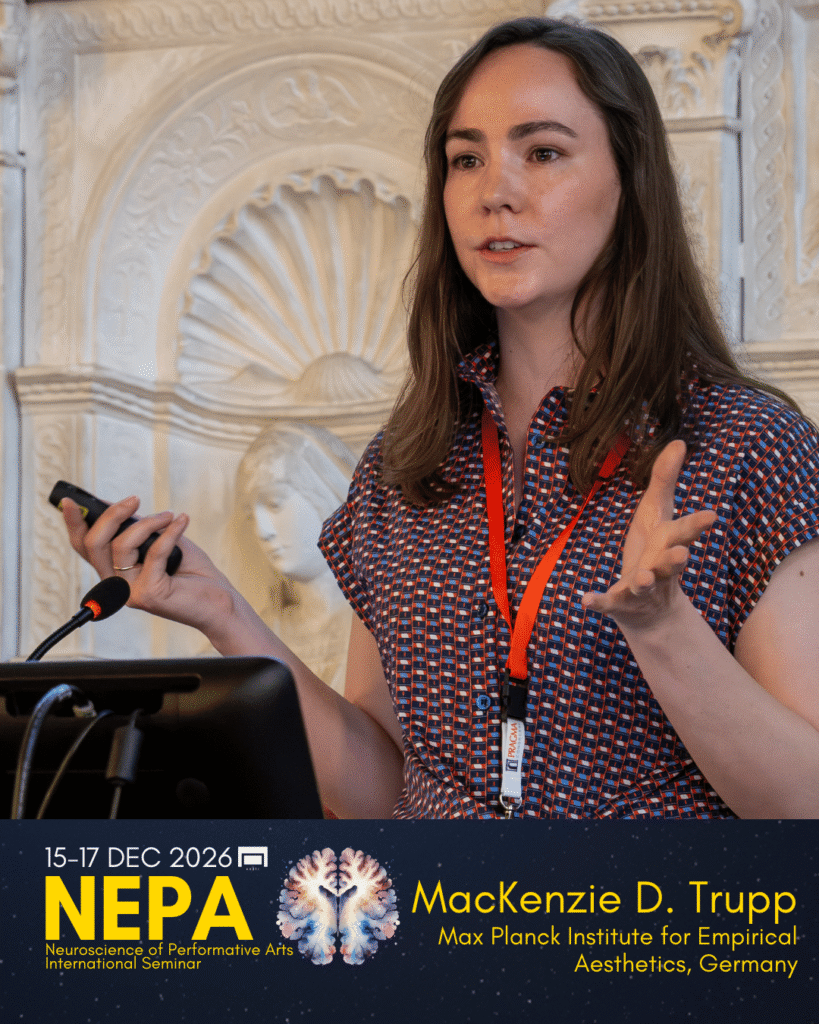
MacKenzie Trupp
Postdoctoral research fellow at the Max Planck Institute for Empirical Aesthetics (Germany)
MacKenzie Trupp is a postdoctoral research fellow at the Max Planck Institute for Empirical Aesthetics. She earned her PhD from the University of Vienna’s Cognitive, Behavioural, and Neuroscience Doctoral School (CoBeNe), and has held postdoctoral positions at the Donders Institute for Cognitive Neuroscience (Radboud University Medical Center) and the University of Vienna’s ARTIS lab.
Her research examines how engaging with art and beauty supports psychological well-being. Her work includes randomised controlled and clinical trials, systematic reviews of the mechanisms behind art’s benefits, and art-based intervention research at the National Gallery, London and the Albertina Museum in Vienna.
Her work has been supported by grants from the American Psychological Association, the Austrian Federal Ministry of Education, Science and Research, the University of Vienna, and CoBeNe. She received the 2023 Impact Award from the City of Vienna Cultural Affairs and the 2025 Barron Award from APA Division 10.
TALK: Can viewing art improve wellbeing?
Over the past two decades, the arts have become increasingly recognised as vital contributors to health and well-being. Yet, much of this attention has focused on art-making, leaving the equally important domain of art-viewing, or “receptive arts”, relatively underexplored. Activities such as visiting museums, attending performances, and listening to music offer unique and accessible pathways to support individual and collective well-being. In this talk, I will focus on art viewing as a complementary counterpart to art creation, providing a theoretical framework and an overview of current evidence on its impacts. Drawing on research from museum studies, healthcare settings, and digital engagement, I will discuss how encounters with visual art can influence health and well-being outcomes and consider potential mechanisms.
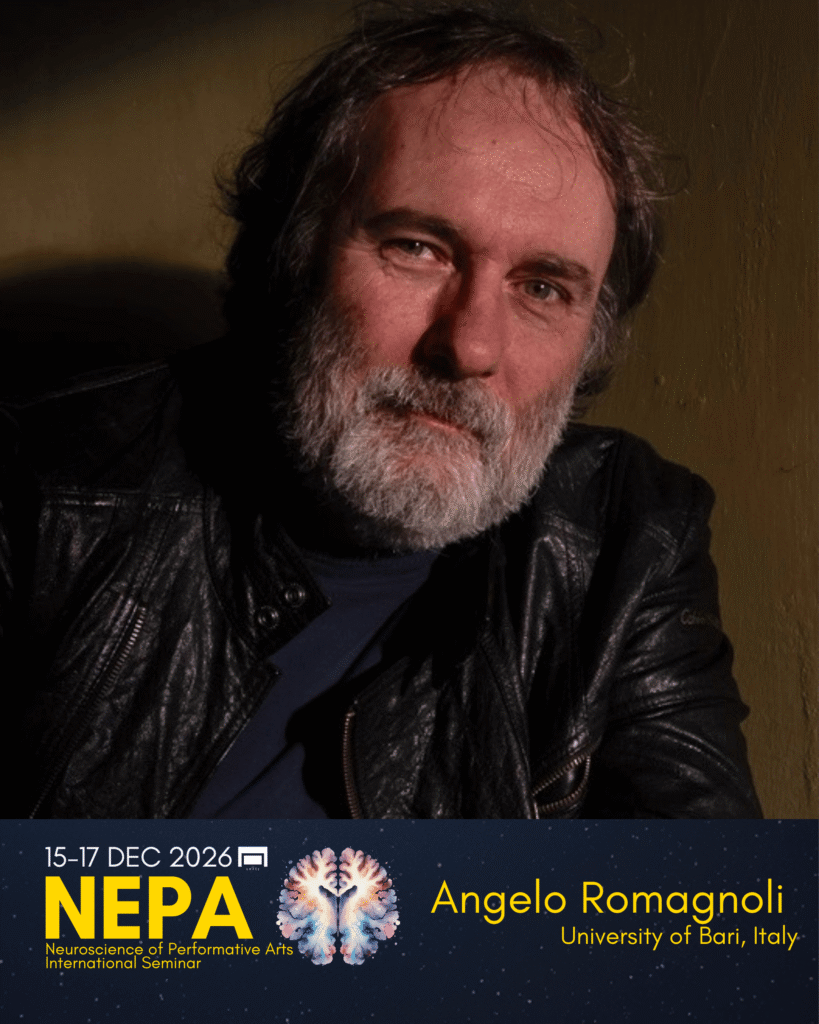
Angelo Romagnoli
PhD, Lecturer in Dramaturgy of Space and in Digital Theatres and Intangible Heritage, Dipartimento di Ricerca e Innovazione Umanistica, Università degli Studi di Bari “Aldo Moro”
Angelo Romagnoli is an actor and scholar-practitioner working across theatre studies, neuroscience and cultural theory. He holds a PhD in Drama by Research from the University of Kent. He was a postdoctoral researcher at the Department of Neuroscience, Imaging and Clinical Sciences, University “G. d’Annunzio” of Chieti-Pescara (Italy). At the University of Bari he teaches “Dramaturgy of Space” and “Digital Theatres and Intangible Heritage” in the MA programme in Culture e Industrie dei Media e dello Spettacolo. He directs The Studio Workshops, an intergenerational training programme, and is Associate Editor of Culture Teatrali, for which he is co-editing an issue on performing arts and medical humanities (2027).
TALK: The Three Spaces of the Actor: a spatial framework for performer metacognition
This research stems from two problems of professional practice that seem remote at first glance: the way actors build their own craft over a long career, through encounters with masters and colleagues, and the hurdles of making an international class of prospective actors, trained through diverse approaches and backgrounds for quite different labour markets, interact meaningfully. I argue that an understanding of spatial processing in humans addresses both.
The paper presents a metacognitive framework developed in doctoral research at the University of Kent and drawn from thirty years of professional practice. Its premise is that human space processing is the common ground on which performance operates, irrespective of aesthetics or cultural origin.
The framework rests on three spaces the actor works in and through: inner space, grounded in interoception; peripersonal space, the sensorimotor interface between body and surroundings; and outer space, the allocentric orientation associated with hippocampal function. These interconnected modes of spatial processing, each documented in contemporary neurophysiology, are brought to bear within the perimeter of performer training, where practice remains the instrument of inquiry.
Thus, resting on the stable nature of human space processing, the framework serves two functions. As a training and pedagogical tool, it allows practitioners to compose disparate techniques for stage presence. As a theoretical instrument, it provides a method of interrogating the archive and finding common threads between remote practices, such as Zeami’s Nō treatises, Thierry Salmon’s spatial system of rehearsal and Samuel Beckett’s directorial practice.
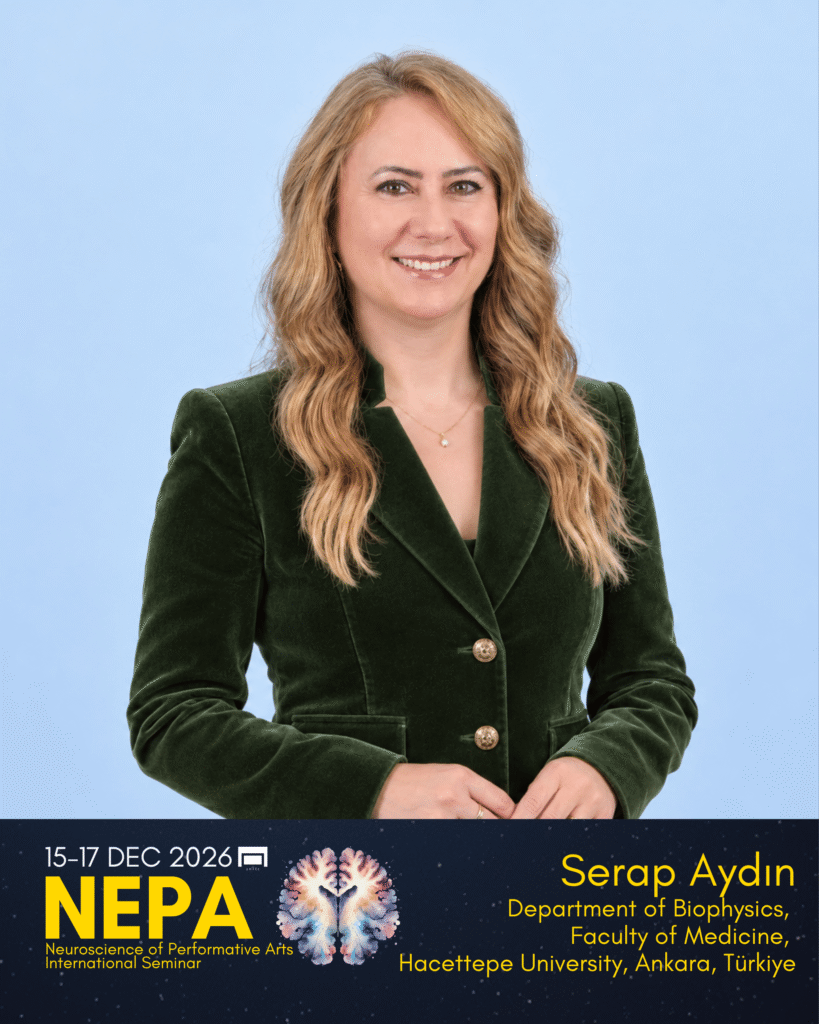
Serap Aydın
Professor in the Department of Biophysics, Faculty of Medicine, Hacettepe University, Ankara, Türkiye
Prof. Serap Aydın is a Professor in the Department of Biophysics, Faculty of Medicine, Hacettepe University, Ankara, Türkiye. She received her B.Sc. (1994), M.Sc. (1997) and Ph.D. (2005) degrees in Electrical and Electronics Engineering (EEE) from Gazi University, 19 Mayıs University and Middle East Technical University, respectively. During her M.Sc. studies, she worked on computer-based analysis of temporomandibular joint sounds. Her PhD with major/minor specializations of Bio-Medical Engineering (BME) & signal processing, introduced novel filtering methods for extracting involuntary brain responses to auditory stimuli. She has been an academic since 1994, working in EEE (1994–2010) and BME departments (2010–2017), before joining Hacettepe University as an Associate Professor in 2018 and becoming a Professor in 2024. Her research and teaching activities addresses brain dynamics underlying perceptual/emotional functions and biomedical signal analysis. Recognized among the world’s top 2% of scientists in the Stanford University and Elsevier career-long/annual impact rankings for the past three consecutive years (2024, 2025, 2026).
TALK: Designing Virtual Worlds That Move Us: EEG-Based Emotion Recognition in Immersive Environments
KEY FINDINGS
Some of the key findings on LDCAPEI lab can be found in the selected publications below:
- Berceanu, A. I., Papasteri, C., Sofonea, A., Boldasu, R., Nita, D., Poalelungi, C., Froemke, R., & Carcea, I. (2024). Oxytocin predicts positive affect gains in a role-play interaction. Frontiers in Psychology, 15:1258254. https://doi.org/10.3389/fpsyg.2024.1258254
- Tomescu, M. I., Papasteri, C., Sofonea, A., Berceanu, A. I., & Carcea, I. (2023). Personality moderates intra-individual variability in EEG microstates and spontaneous thoughts. Brain Topography, 37(4), 524–535. https://doi.org/10.1007/s10548-023-01019-x
- Berceanu, A. I., Papasteri, C. C., Sofonea, A., Boldasu, R., Nita, D., Poalelungi, C., & Carcea, I. (2022). Role-play regulates positive emotions and prosocial attitudes [Preprint]. PsyArXiv. https://doi.org/10.31234/osf.io/r6cpn
- Tomescu, M. I., Papasteri, C. C., Sofonea, A., Boldasu, R., Kebets, V., Pistol, C. A. D., Poalelungi, C., Benescu, V., Podina, I. R., Nedelcea, C. I., Berceanu, A. I., & Carcea, I. (2022). Spontaneous thought and microstate activity modulation by social imitation. NeuroImage. DOI: 10.1016/j.neuroimage.2022.118878
- Cîrneci, D., Onu, M., Papasteri, C. C., Georgescu, D., Poalelungi, C., Sofonea, A., Pușcașu, N., Tanase, D., Rădeanu, T., Toader, M., Dogaru, A. L., Podina, I. R., Berceanu, A. I., & Carcea, I. (2022). Neural networks implicated in autobiographical memory training. eNeuro, 9(6), ENEURO.0137-22.2022. https://doi.org/10.1523/ENEURO.0137-22.2022
- Berceanu, A. I., Matu, S., & Macavei, B. I. (2020). Emotional and cognitive responses to theatrical representations of aggressive behavior. Frontiers in Psychology, 11:1785. https://doi.org/10.3389/fpsyg.2020.01785
- Papasteri, C. C., Sofonea, A., Boldasu, R., Poalelungi, C., Tomescu, M. I., Pistol, C. A. D., Vasilescu, R. I., Nedelcea, C., Podina, I. R., Berceanu, A. I., Froemke, R. C., & Carcea, I. (2020). Social feedback during sensorimotor synchronization changes salivary oxytocin and behavioral states. Frontiers in Psychology, 11:531046. https://doi.org/10.3389/fpsyg.2020.531046
NEPA
Nepa anophthalma is a small, blind water scorpion endemic to Movile Cave, Romania, living in an environment devoid of light and oxygen. The discovery of this remarkable creature was inspired by the work of Emil Racoviță, the pioneering Romanian biologist who studied how life evolves in isolated cave ecosystems. Similarly, the NEPA initiative views the performing arts as a living laboratory for studying the complexity of human communication, emotion, and representation of life, bringing neuroscientific and physiological research methods from the lab into the performative space.

Check out the previous edition of the NEPA SEMINAR (2025)