




VIWAS: The Virtual Worlds Skills Academy — building Europe’s immersive skills ecosystem for learners, educators, professionals and institutions
Project: VIWAS – Virtual Worlds Skills Academy
Call:
Digital Europe – DIGITAL-2025-SKILLS-08-VIRTUAL-WORLDS-ACADEMY-STEP
Type of Action: DIGITAL-LS / Proposal number: 101298981
Implementation Period: 2026-2030
EU Grant: 8,544,235.24 € (UNATC – 372,477.70 €)
Call:
UEFISCDI – Programul 5.8. – Cooperare europeană și internațională.
Subprogramul 5.8.2. – Inițiative europene și internaționale.
Europa Digitală – Academia de Competențe pentru Lumile Virtuale.
PN-IV-P8-8.2-EUD-2026-0073
Implementation Period: 01.09.2026 – 01.09.2029
UEFISCDI Grant: 866,720 lei
Partners:
Cyens Centre of Excellence (CY) (coordonator), Suomen ympäristöopisto SyklI oy (FI), SC Nedho Animation SRL (RO), Nedho (FI), XB Bootcamp GmbH (DE), Akmi Anonimi Ekpaideftiki Etairia (EL), Medien Bayern GmbH (DE), Universitatea Națională de Artă Teatrală și Cinematografică (RO), Skillnet Ireland Company Limited by Guarantee (IE), Universitat Autònoma de Barcelona (ES), Instytut Chemii Bioorganicznej Polskiej Akademii Nauk (PL), École Nationale Supérieure d’Arts et Métiers (FR), Europäischer Verband Beruflicher Bildungsträger (DE), XR4Europe (BE), BSD Societa a Responsabilita Limitata (IT), Università Telematica Internazionale Uninettuno (IT), Secretariatul Național al Rețelei Universităților (RO), Università degli Studi di Roma La Sapienza (IT), EIT Manufacturing South SRL (IT), Universitat Politècnica de Catalunya (ES), Comau SpA (IT).
Project Description
The rapid evolution of immersive digital technologies such as virtual reality (VR), augmented reality (AR), and extended reality (XR) has led to the emergence of Virtual Worlds (VWs) as transformative tools across sectors. However, the education and training landscape has yet to fully respond to the growing demand for specialized VW-related skills. The Virtual Worlds Skills Academy (ViWAS) aims to bridge this skills gap by developing a comprehensive, future-proof competence and training ecosystem that equips learners, educators, and professionals with the necessary capabilities to thrive in and shape the VWs economy. ViWAS is a pioneering educational initiative that combines the power of RenDanHeYi (2021) organisational model with the agility of the franchise system in an educational context. ViWAS has a cloud-enterprise-like modern structure and aims to prepare the future developers, teachers, architects, designers, and users of VWs through a fundamentally new approach to education that relies on AGILE structures, design thinking, and an entrepreneurial mindset. It will contribute to the EU’s digital transformation by upskilling and reskilling the workforce in the fast-growing field of VW. By fostering collaboration between education providers, industry, and policymakers, ViWAS will pave the way for inclusive, innovative, and sustainable digital learning environments across Europe. ViWAS is focusing on teaching and learning skills for, about and with VWs, developing a network of learning centres that can rapidly adapt to the dynamic evolution of VW, placing the learner at the centre of the educational process and fostering an entrepreneurial spirit and design thinking approach at every level.
Mission
Training learners, educators & industry for XR and Web 4.0
ViWAS addresses the critical skills gap in virtual worlds technologies — XR, AI, 3D, digital twins and spatial design — that will define how humans and industries interact with technology through 2030 and beyond. Led by CYENS Centre of Excellence (Cyprus), ViWAS brings together 39 partners from 20+ European countries to build a comprehensive skills ecosystem.
Consortium Partners
- CYENS Centre of Excellence (CY) (Coordinator)
- Suomen ympäristöopisto SYKLI oy (FI)
- SC Nedho Animation SRL (RO)
- Nedho (FI)
- XB Bootcamp GmbH (DE)
- AKMI Anonimi Ekpaideftiki Etairia (EL)
- Medien Bayern GmbH (DE)
- Universitatea Națională de Artă Teatrală și Cinematografică (RO)
- Skillnet Ireland Company Limited by Guarantee (IE)
- Universitat Autònoma de Barcelona (ES)
- Instytut Chemii Bioorganicznej Polskiej Akademii Nauk (PL)
- École Nationale Supérieure d’Arts et Métiers (FR)
- Europäischer Verband Beruflicher Bildungsträger (DE)
- XR4Europe (BE)
- BSD Societa a Responsabilita Limitata (IT)
- Università Telematica Internazionale Uninettuno (IT)
- Secretariatul Național al Rețelei Universităților (RO)
- Università degli Studi di Roma La Sapienza (IT)
- EIT Manufacturing South SRL (IT)
- Universitat Politècnica de Catalunya (ES)
- Comau SpA (IT)
Consortium Composition
12 VET & Training Institutions
Vocational education and training providers delivering ViWAS programmes at national level across Europe.
9 XR & Technology Companies
Industry partners providing technical expertise, real-world use cases, and access to XR tools and platforms.
8 Research Centres & Universities
Academic partners contributing research, competence mapping, and scientific dissemination.
10 Networks & Associations
European and national organisations ensuring broad outreach across vocational education, training, and XR ecosystems.
Target groups
Find your pathway — Six audience groups have different needs, from entry-level orientation to educator resources and professional upskilling.
HE Students & Young Graduates
Higher education students and young graduates seeking foundational and advanced XR and virtual worlds skills for employment and further study.
Academic Staff (VW disciplines)
Academic staff teaching disciplines related to virtual worlds technologies who need to update and expand their digital teaching competences.
VET / Secondary Students
Upper secondary and vocational education students seeking pathways into the immersive technology sector through practical, hands-on training.
VET & Secondary Teaching Staff
VET and upper secondary teaching staff who need pedagogical and technical training to deliver virtual worlds education confidently.
Industry Professionals
Professionals in manufacturing, creative industries, healthcare and other sectors adopting XR, digital twins and AI-driven immersive technologies.
Citizens
Members of the general public who want to understand, engage with and participate in virtual worlds and the emerging digital economy.
Six Core Skill Domains
Extended Reality (XR)
VR, AR and MR design, development and deployment for professional contexts. Covers hardware, software, UX design, content pipelines and industrial applications.
AI & Intelligent Systems
AI integration in immersive environments, generative content creation, conversational NPC design, spatial AI and adaptive user experience systems.
Digital Twins
Designing, building and operating real-time virtual replicas of physical systems. Industry 4.0 applications in manufacturing, infrastructure and urban planning.
3D & Spatial Design
3D modelling, animation, spatial UX/UI, world-building and the complete creative production pipeline for professional immersive content.
Web 4.0 & Semantic Web
Decentralised architectures, semantic technologies, interoperability standards and the next generation of internet infrastructure underpinning virtual worlds.
Content Creation
Interactive narrative design, storytelling, game-based learning design and media production tailored to virtual and extended reality environments.
UNATC – ViWAS Staff
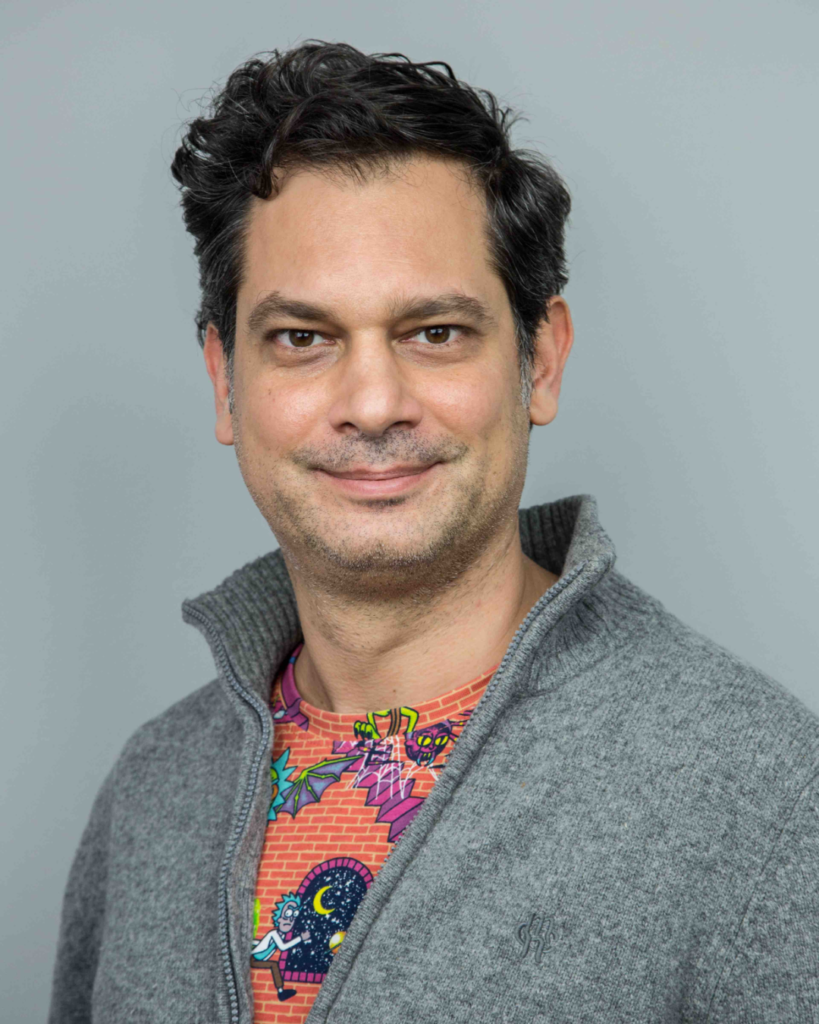
Dr. Alexandru I. Berceanu is a mixing-realities director and researcher conducting interdisciplinary research at the intersection of art and neuroscience. Starting with his doctoral studies, his research has centered on aggressive and prosocial behavior, using drama and immersive environments as investigative tools to develop emotional regulation through gamified approaches and theatrical representation. His results are published in international journals, and his artistic work covers interactive-media installations, VR, immersive environments, and theatre. He is an associate professor in the Animation and Interaction Department at UNATC Romania, where he also teaches in the Community and Therapeutic Theatre master’s program. At UNATC he initiated the International Center for Research and Education in Innovative and Creative Technologies (CINETic), as well as its master’s program in Interactive Technologies.

Dr. Grigore Burloiu is a Lecturer in the Animation & Interactivity department at the National University of Theatre and Film in Bucharest, where he teaches Creative Coding, Interactive Music Systems and Game Development, and coordinates the Interactive Technologies for Performing and Media Arts M.A.
Grigore develops systems for expressive accompaniment and for interactivity in art. In 2024 he participated in the MODINA project alongside Simona Deaconescu with a lecture-performance where he developed AI systems for music and text interaction. He has also done practice-led research into motion and gesture sonification for interactive performance. His artistic collaborations have been presented internationally in venues such as Ars Electronica (AT), Vivid Festival (AU), Fete des Lumieres (FR), Prague Quadrennial of Performance Design and Space (CZ).

Dr. Marina Hanganu is a theatre director and a researcher at UNATC Bucharest, exploring the intersection of technology and the performing arts, with a focus on telematic and robotic performance. She has initiated and led several artistic research projects, including Little Rover (Micul Rover, co-funded by AFCN, 2026, ongoing), E-Waste E-Motion: A Robofable (co-funded by AFCN, 2025) and the Creative Europe-funded Tele-Encounters (2017–2019) and Tele-Encounters: Beyond the Human (2020–2023). Her work spans project management, artistic research, theatre directing, playwriting, and workshop facilitation for students, teenagers, and children. She holds a PhD in Theatre and Performing Arts on the topic of telematic theatre (UNATC), an MA in Advanced Theatre Practice (Royal Central School of Speech and Drama), and a BA in Theatre Directing (UNATC).

Georgiana Ene is a fourth-year PhD student at the National University of Theatre and Film “I.L Caragiale” in Bucharest, specialising in Theatre and Performing Arts. Her research is centred on the development of novel approaches to the marketing of national theatres in Romania, and her thesis is entitled “New marketing directions in national theatres in Romania”. Furthermore, she holds a Master’s degree in “Theatre Studies – Cultural Management and Marketing” from the same institution. Concurrently, she successfully completed a Master’s programme in Management and Communication at the National School of Political Science, specialising in Performance Management.
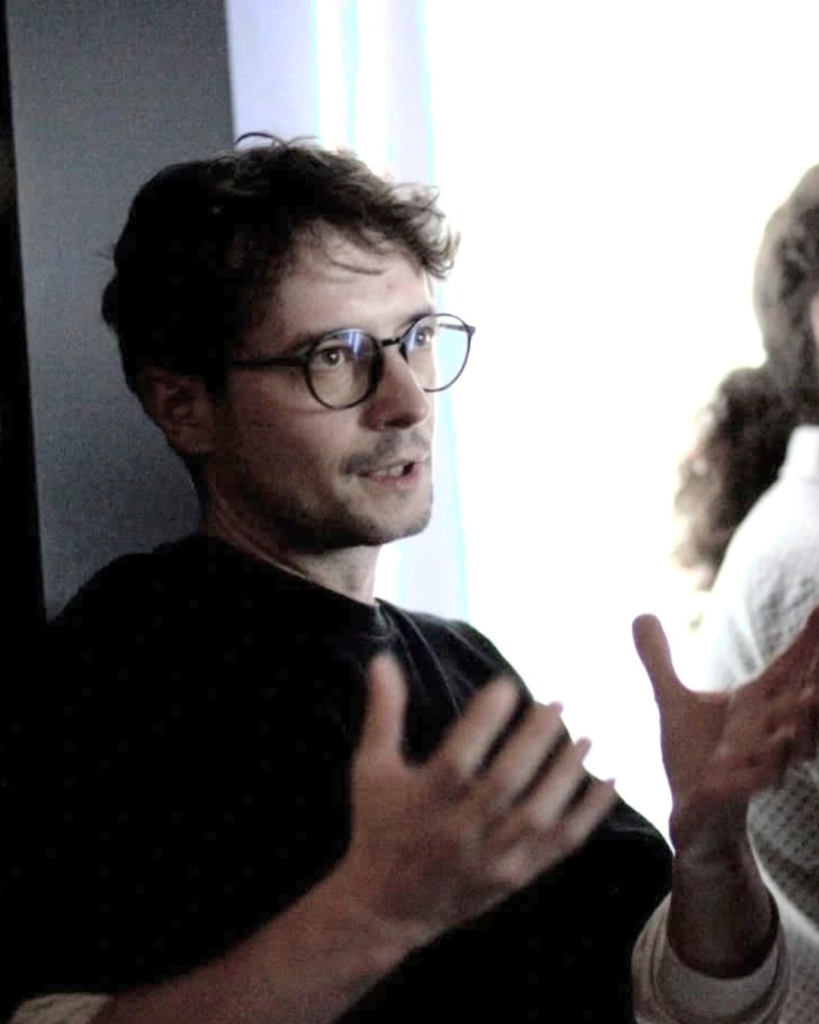
Ciprian Fācāeru is a pioneer of the XR scene, with over a decade of creative inquiry, design-led practice, and production at the forefront of emerging media technologies.
Research assistant within the Department of Research, Development and Innovation, CINETic – UNATC, co-founder of the Augmented Space Agency studio and Space Continuum association, Ciprian is one of the representative figures of XR practices in Romania.
Architect of immersive spaces, director of augmented experiences, and researcher of new media practices. His work is situated within the expanding continuum between physical and virtual space, tangible and intangible data, human and artificial intelligence. In this context, he examines how contemporary technologies reconfigure perception, presence, and modes of being in the world.
To navigate this expanse, he centres his design philosophy on agentic–environmental framework that guides the development of immersive systems structured around augmented human agency, extended spatial conditions, and mediated relations between bodies, technologies, and the built, virtual, and hybrid worlds they inhabit. Through this approach, he frames immersive media as a transdisciplinary territory operating across cultural, educational, scientific, industrial, and civic domains, transforming the ways spaces are imagined, narrated, experienced, and inhabited.

Nicoleta Mihaela Herăscu brings over 16 years of experience in managing and implementing projects funded by the state budget and EU programs—including the European Social Fund (ESF), European Regional Development Fund (ERDF) and the EEA Financial Mechanism. She holds a Master’s degree in Project and program management, as well as professional certifications as a procurement expert, human resources inspector, social economy entrepreneur, project evaluator and trainer.
The main projects she has been involved in include:
2017-2021: MET-Developing a Methodology of Therapy Through Theatre with an Effect at the Neurochemical and Neurocognitive Levels (Competitiveness Operational Programme 2014–2020)
2021-2024: STAD– Social Transmission of Cognitive and Emotional States in the Care of Alzheimer’s Disease Patients (EEA Financial Mechanism 2014–2021)
2025-present: PAF! The first artist in the family! (ESF+ / Education and Employment Programme 2021–2027)
2026-present: ViWAS-Virtual Worlds Skills Academy (European Union under the Digital Europe Programme and State budget under the UEFISCDI)

Christina Berea is a support staff member with experience in career guidance at the National University of Theatre and Film “I.L. Caragiale” in Bucharest, as well as in collaboration with independent arts organizations, and in event coordination. Her work focuses on supporting students and graduates, facilitating access to professional and educational opportunities, and strengthening connections with the cultural and creative sector.